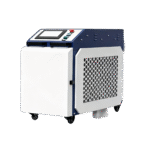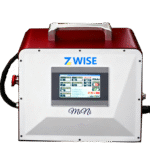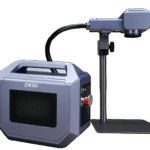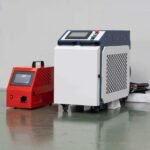


As manufacturing standards rise and environmental regulations become stricter, factories worldwide are rethinking how they clean metal surfaces. Traditional methods such as sandblasting, chemical cleaning, and manual grinding are increasingly seen as inefficient, costly, and environmentally unfriendly.
In recent years, pulsed laser cleaning machines have emerged as a modern alternative—and more factories are making the switch. But why exactly is this technology gaining so much attention? Let’s take a closer look.
1. Non-Contact Cleaning Without Damaging the Base Material
One of the biggest advantages of pulsed laser cleaning is that it is a non-contact process.
Unlike sandblasting or wire brushing, laser cleaning removes contaminants—such as rust, paint, oil, or oxide layers—without physically touching the metal surface. The laser energy is absorbed by the unwanted layer, which is instantly vaporized or ejected, while the base material remains intact.
For industries where surface integrity is critical—such as aerospace, automotive, and mold manufacturing—this is a major reason for switching.
2. Higher Precision and Better Control
Pulsed laser cleaning machines offer exceptional precision.
By adjusting parameters such as pulse width, frequency, and power, operators can precisely control:
-
Cleaning depth
-
Cleaning area
-
Cleaning intensity
This makes pulsed laser cleaning ideal for:
-
Selective rust removal
-
Cleaning complex geometries
-
Preparing surfaces for welding, bonding, or coating
Factories no longer need to worry about over-cleaning or damaging expensive parts.
3. Environmentally Friendly and Chemical-Free
Environmental compliance is becoming a top priority for manufacturers.
Traditional cleaning methods often rely on:
-
Chemical solvents
-
Abrasive media
-
Large amounts of water
Pulsed laser cleaning, by contrast, is:
-
Chemical-free
-
Low waste
-
No secondary pollution
Most contaminants are collected via a simple dust extraction system, making the process cleaner and safer for both workers and the environment. This helps factories reduce disposal costs and comply with increasingly strict environmental regulations.
4. Lower Long-Term Operating Costs
While the initial investment in a pulsed laser cleaning machine may be higher than traditional tools, factories quickly realize significant long-term savings.
There are:
-
No consumables (no sand, chemicals, or solvents)
-
Minimal maintenance requirements
-
Reduced labor costs due to automation
-
Less downtime and rework
Over time, the total cost of ownership is often lower than conventional cleaning methods, making laser cleaning a smart financial decision.
5. Improved Production Efficiency
Speed and consistency matter in modern manufacturing.
Pulsed laser cleaning machines can be easily integrated into:
-
Production lines
-
Robotic systems
-
Automated workstations
This allows factories to clean parts faster and more consistently than manual methods. Operators can achieve repeatable results with minimal training, improving overall productivity and reducing human error.
6. Wide Range of Industrial Applications
Another key reason for adoption is versatility.
Factories are using pulsed laser cleaning machines for:
-
Rust and oxide removal
-
Paint and coating stripping
-
Mold cleaning
-
Welding pre-treatment
-
Surface preparation before bonding or coating
-
Historical restoration and precision cleaning
This wide application range makes pulsed laser cleaning a valuable asset across multiple industries.
7. Safer Working Environment
Worker safety is a growing concern in industrial facilities.
Compared to traditional methods, pulsed laser cleaning:
-
Produces less dust and noise
-
Eliminates exposure to harmful chemicals
-
Reduces physical strain on operators
With proper safety enclosures and laser protection measures, factories can significantly improve workplace safety and meet occupational health standards.
Conclusion: A Smart Upgrade for Modern Factories
As factories strive for higher efficiency, better quality, and sustainable production, pulsed laser cleaning machines are becoming the preferred solution.
With advantages such as non-contact cleaning, precision control, environmental friendliness, and lower long-term costs, it’s clear why more manufacturers are making the switch.
If your factory is looking to modernize its surface cleaning process, investing in a pulsed laser cleaning machine could be the next smart step toward higher productivity and competitiveness.